Choose one gesture
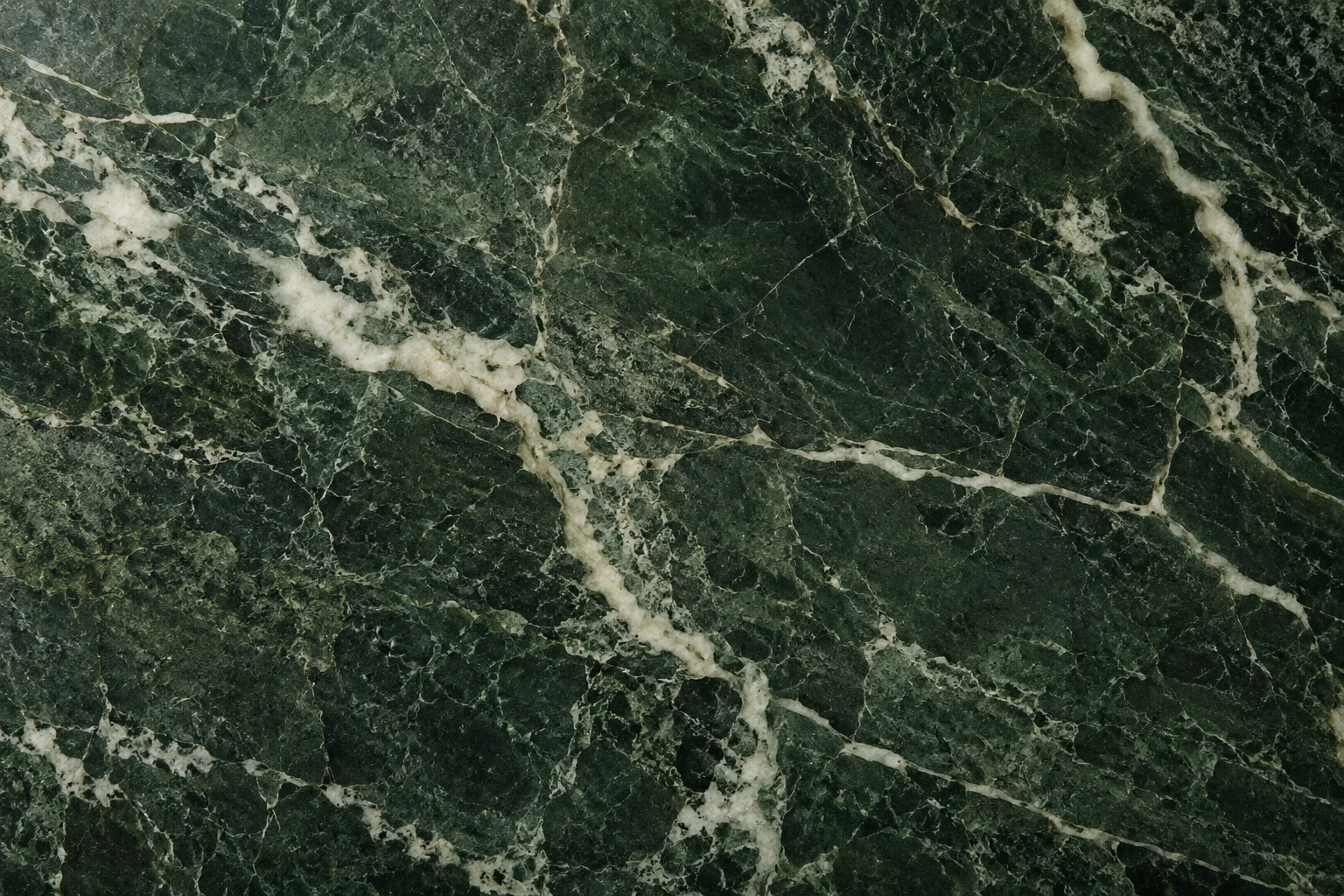
Begin with the part of the stone you cannot stop looking at: a pale vein, a dark mineral pocket, a wash of warm grey. Use that detail as the starting point for the room rather than collecting unrelated finishes.
Find its companions
Let neighbouring materials respond quietly. A wood tone can echo the warmth within the slab. A metal finish can sit beside its cooler shades. Leave some surfaces plain so the eye has somewhere to rest.
Give it room
The most expressive stone does not always need the largest area. A carefully placed shelf, a small sculptural table or one continuous surface can be enough. This is an invitation to compose, not a rule about how much stone a room should contain.
Try three levels of intensity
Start with one expressive surface, then add a quieter companion and a nearly plain background. For example, a dramatic slab can sit beside walnut and warm plaster. This is a compositional exercise, not a fixed formula: change the proportions until one clear idea remains.
Edit before adding
Stand at the entrance and notice what catches your eye first. If the backsplash, island, light fixtures and furniture all compete, simplify one element. Luxury can come from the precision of a relationship, rather than the number of expensive finishes.
From a tray to a table
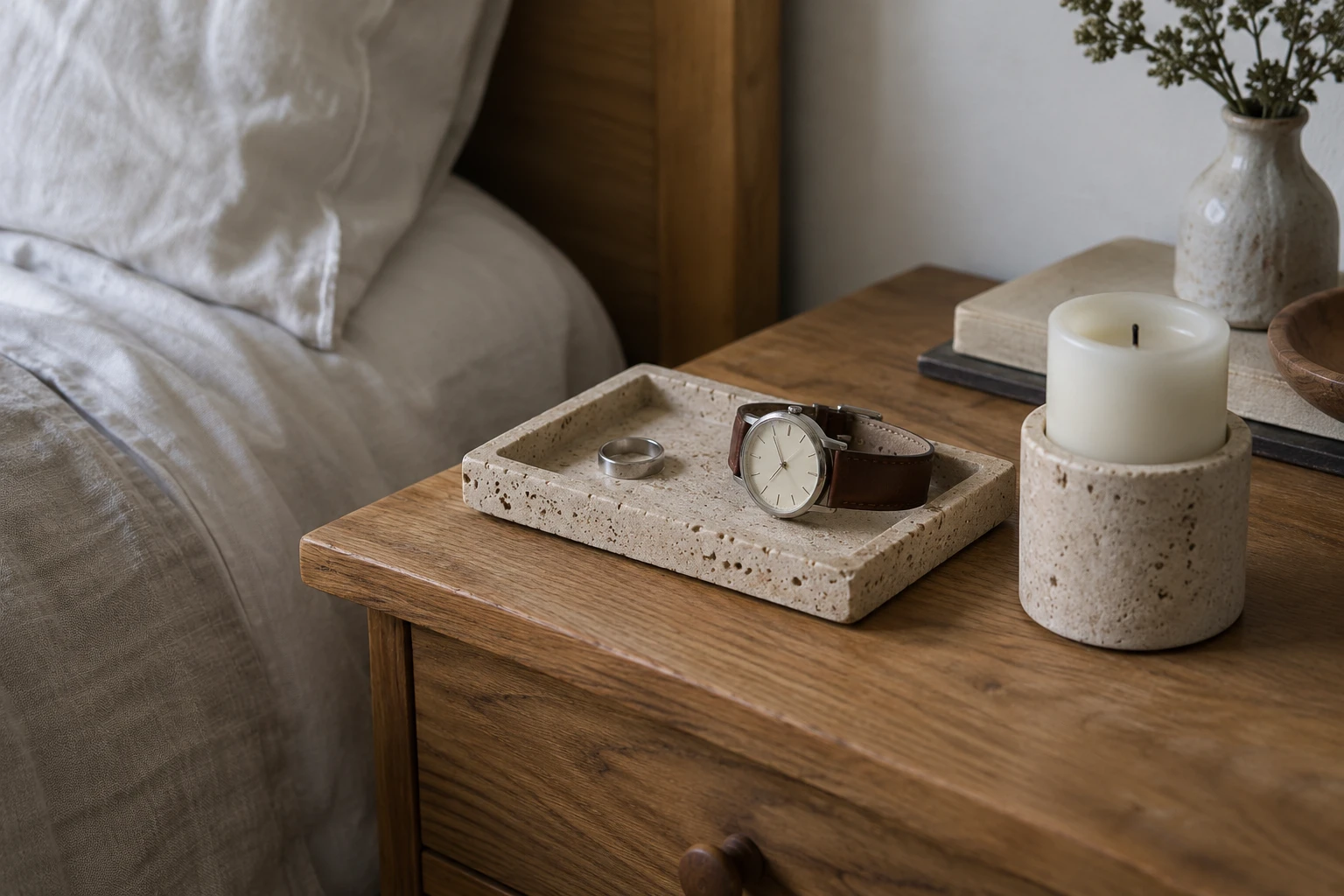
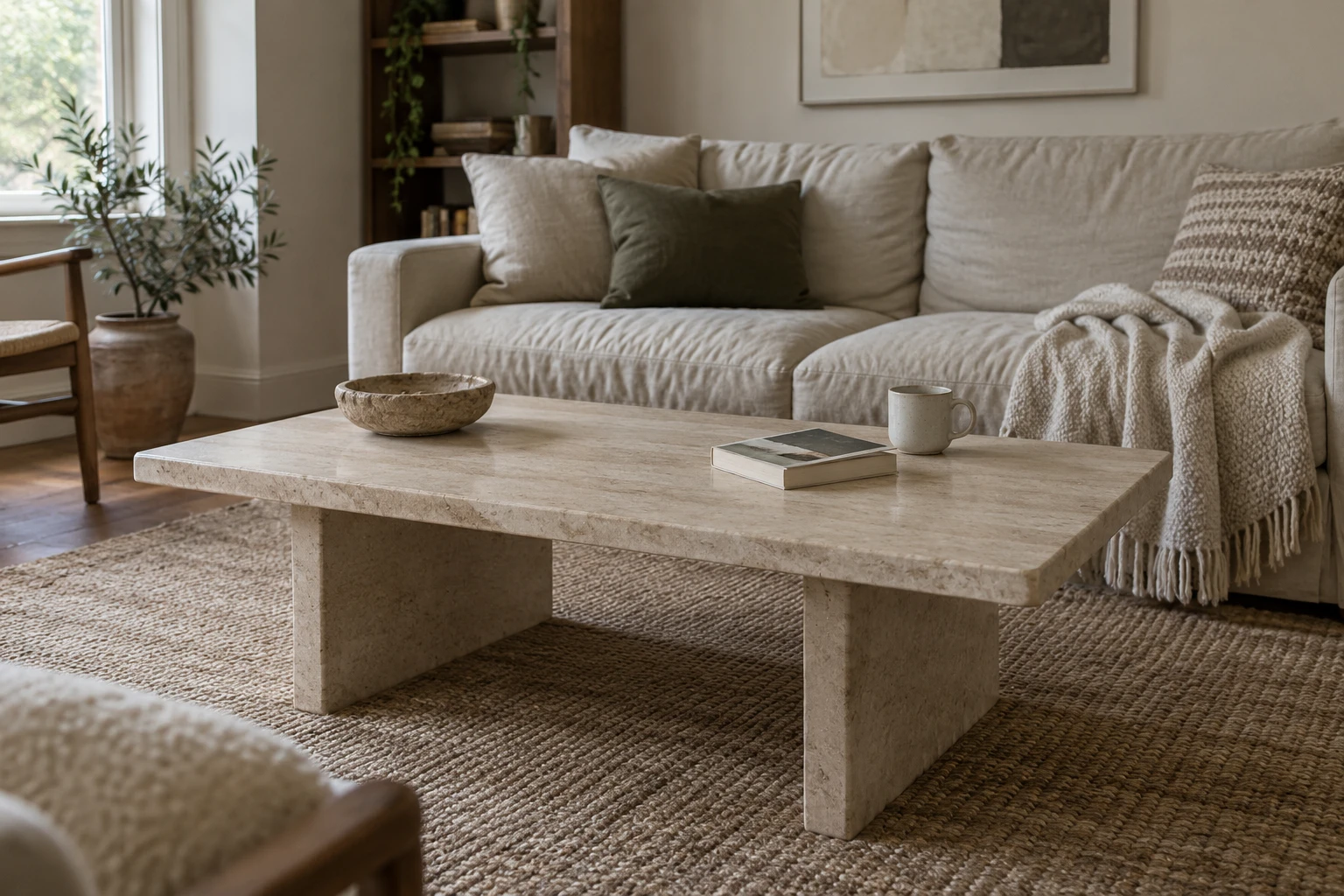
Try the idea at a smaller scale first. A shallow jewellery tray gives everyday objects a place to return to; a coffee table brings the material into the centre of the room. Leave usable surface around either one. At the bedside, consider how a tray sits beside a lamp and a book. For a dining table, look beyond the top to how the base meets the chairs. These are styling suggestions using imagined, unbranded objects; a real purchase calls for verified dimensions, construction and care instructions.
CONTINUE THE CONVERSATION
What are you imagining?
Tell us which object or material interests you. The collection is in development; we are not accepting orders or payments.
Contact The Haus ↗