Draw the space you will actually use
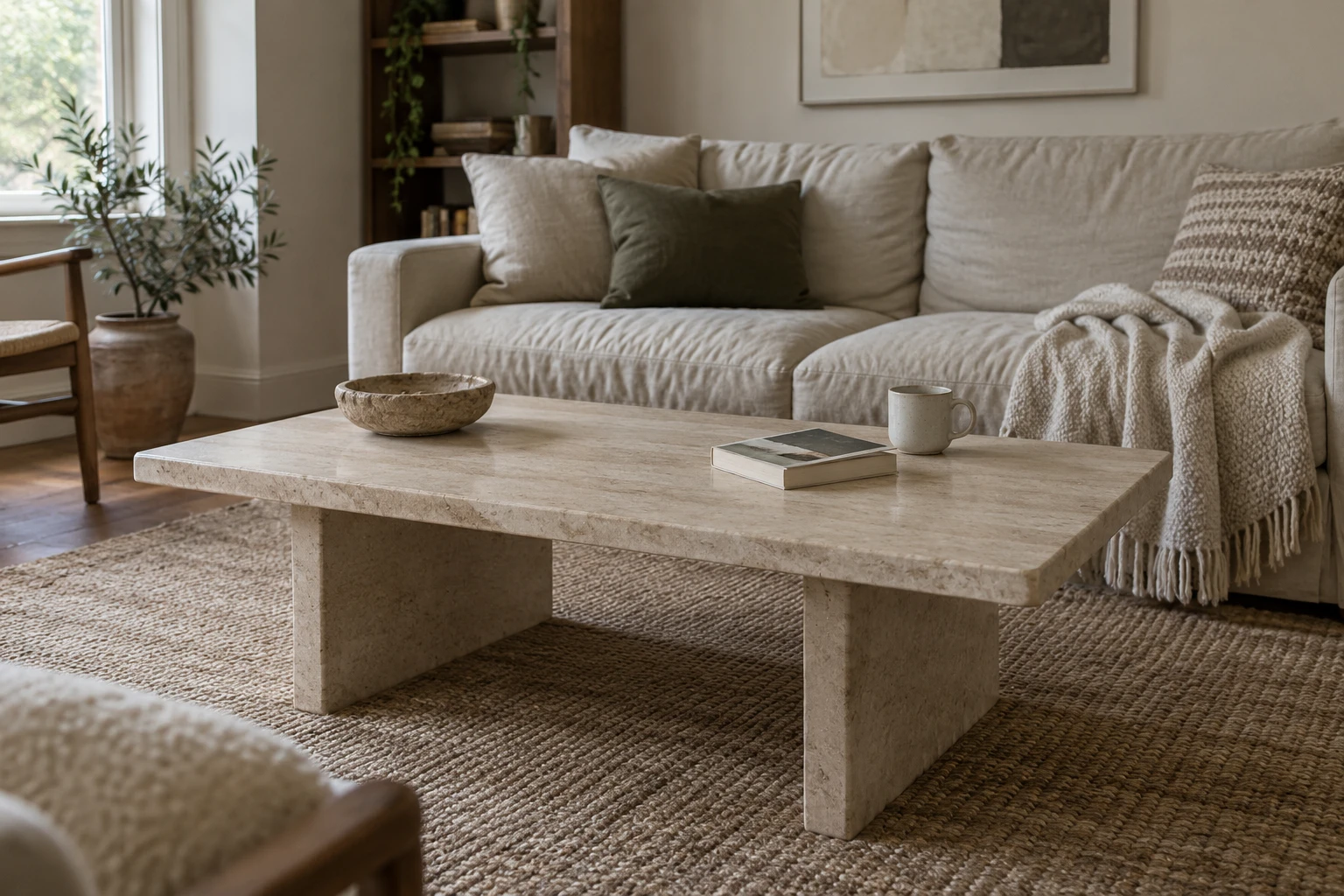
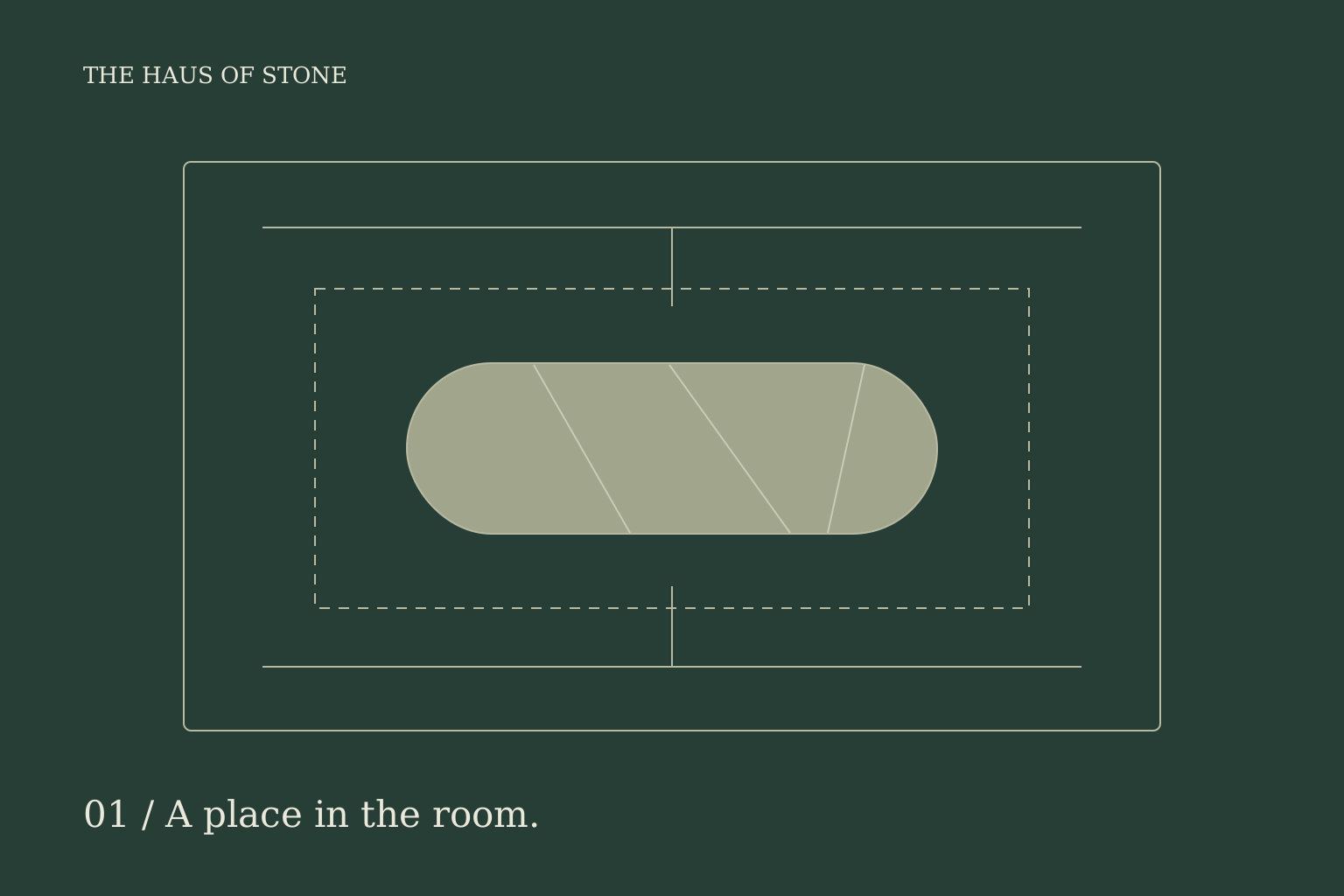
A photograph can make a small side table look monumental. A coffee table has a different job: it sits between seats, receives everyday objects and affects how people cross the room. Our starting point is a full-size paper or cardboard footprint on the floor. Try it from every seat. Reach for a cup, stand up and walk through the room with the arrangement in place. Include the furniture you already own.
Read the whole object
Ask for overall dimensions, usable top dimensions, finished height, construction and total weight. A thick-looking edge may be built from joined pieces; a solid block is a different proposition. Neither description tells you the quality by itself. Request a view of the underside, an explanation of how the top is secured and the maker’s guidance on stability and use. Structural approval belongs to a qualified maker, not an image or a rendering.
Give the pattern a job
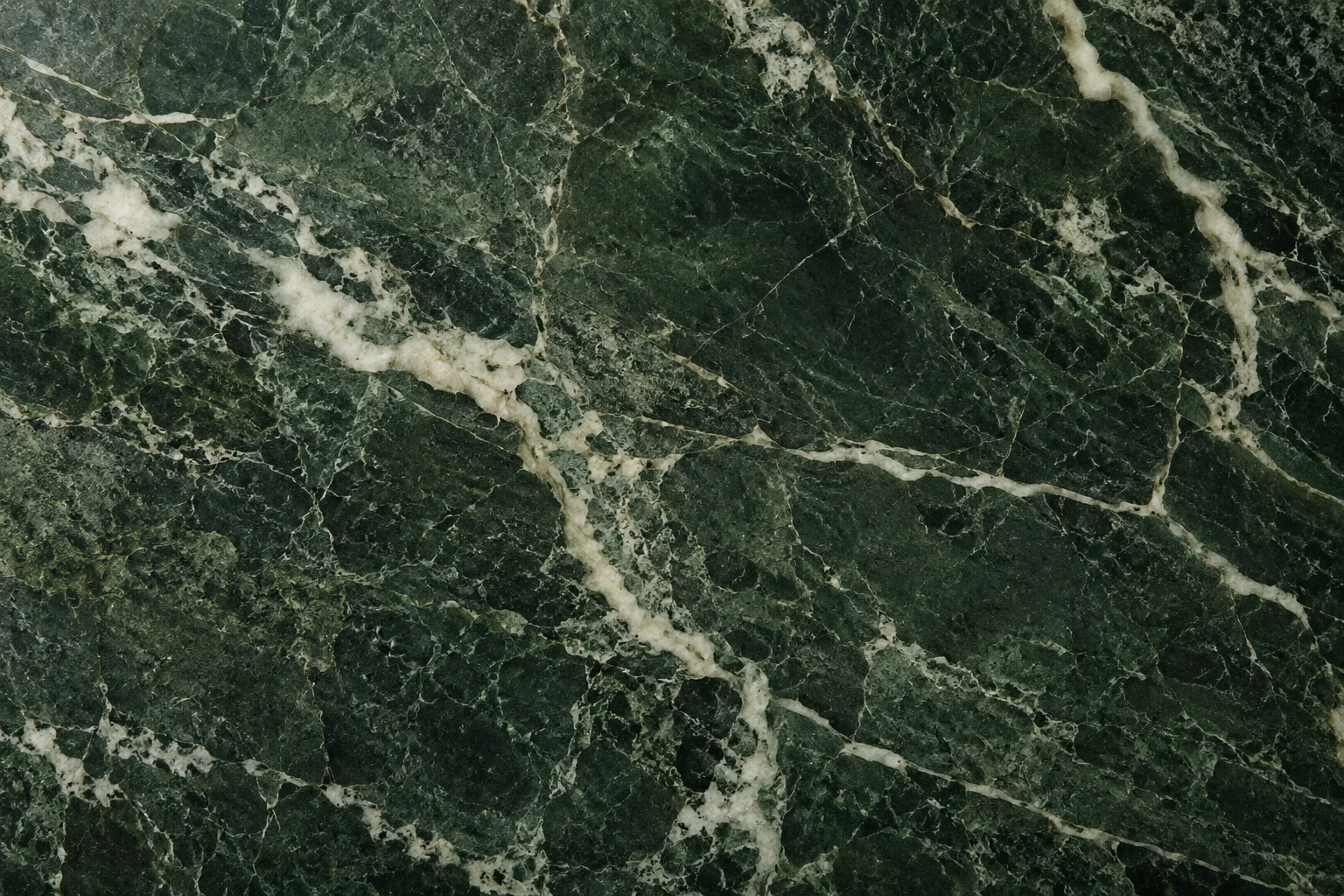
Our editorial preference is to choose one visual gesture: an open base, a quiet silhouette or a dramatic area of veining. Place photographs of the actual material beside the room palette. Consider where seams would fall and which face you would see from the entrance. A wood base can introduce warmth; a stone base can give visual continuity. Compare the entire composition instead of borrowing a distinctive table silhouette unchanged.
Plan the arrival before the purchase
Measure the route from delivery point to final position, including door openings, corners, stairs and elevator restrictions. Ask the seller who supplies these measurements, what delivery includes, who assembles the piece and what happens if it cannot enter. Obtain written requirements for safe handling and floor suitability for that exact table. Do not infer a crew size or lifting method from its photograph.
Ask for one complete price
Compare the piece, packing, freight, any access surcharge, assembly and applicable taxes together. Clarify the process for transit damage and returns before paying. Our collection remains in development; this guide is a way to assess a future purchase, not a specification for a Haus product. A good decision leaves you with dimensions, material identification, care instructions and delivery terms you can actually refer to.
CONTINUE THE CONVERSATION
What are you imagining?
Tell us which object or material interests you. The collection is in development; we are not accepting orders or payments.
Contact The Haus ↗