A small scene repeats at the end of the day: a watch comes off, a ring needs somewhere to rest, and a book takes the phone’s place. Designing for that moment can be more rewarding than filling a surface with decorative objects. A stone tray offers a gathering point. Its usefulness begins with what it holds; its beauty emerges from the relationship with timber, light and the unoccupied space around it. The material can have presence without taking over the room.
Begin with the gesture
Before choosing a tray, notice what you actually leave beside the bed. Perhaps it is just a watch and a ring. Perhaps glasses, earrings and a small case. Arrange those objects on a sheet of paper and leave enough space to pick them up comfortably. This simple exercise helps you picture the usable interior. A tray’s outside dimensions do not tell the whole story: a wide rim or a deeply shaped interior can substantially reduce the area where your belongings sit.
A low edge makes the contents easy to see. A higher one can feel more contained, but also asks your hand to travel a little farther. There is no single correct shape. Think about the gesture you will repeat, the size of your pieces and whether you prefer to keep them apart. For delicate jewellery, follow its maker’s storage advice; the appearance or texture of stone alone does not establish that it is suitable for every finish.
Give it a relationship with the table
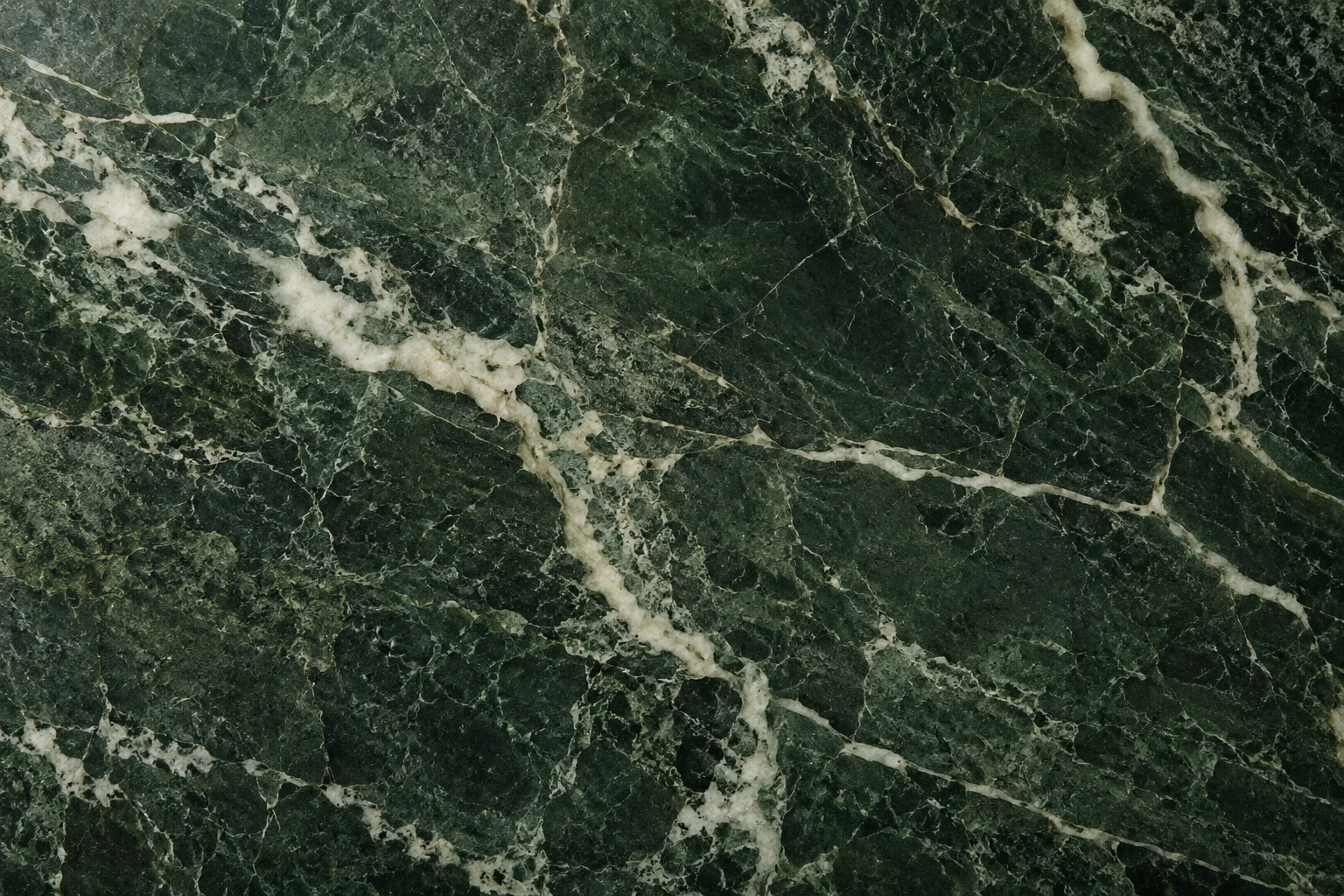
Pale stone on warm wood can create a gentle contrast. Dark stone against a light surface can make a more defined focal point. These are compositional choices, not rules of good taste. Look at the table’s edge, the lamp base and the hardware as well. If each is expressive, a simple tray can give the eye somewhere to rest. If the surrounding pieces are quiet, movement within the material may be enough to introduce character without another decorative gesture.
Keep room to use the furniture. The lamp needs its own space, and a book should open without requiring the whole scene to be rearranged. Try a paper template before buying. If you keep water beside the bed, decide where its coaster belongs. Check the arrangement while seated or lying down, rather than judging only from the doorway. The purpose is to support a familiar routine, so the table still works when you are tired and reaching for something.
Look at the actual piece
A photograph presents a selection under particular lighting. Before deciding, read the description and dimensions of the specific item. Is it natural stone, a composite or an imitation? Does its underside have protection compatible with your tabletop’s finish? Does the seller explain variation between individual pieces? What cleaning instructions are supplied? These questions matter even for a small object. A description such as “travertine look” does not establish that the tray is made from natural travertine, however convincing the photograph may be.
Let stone belong to the house
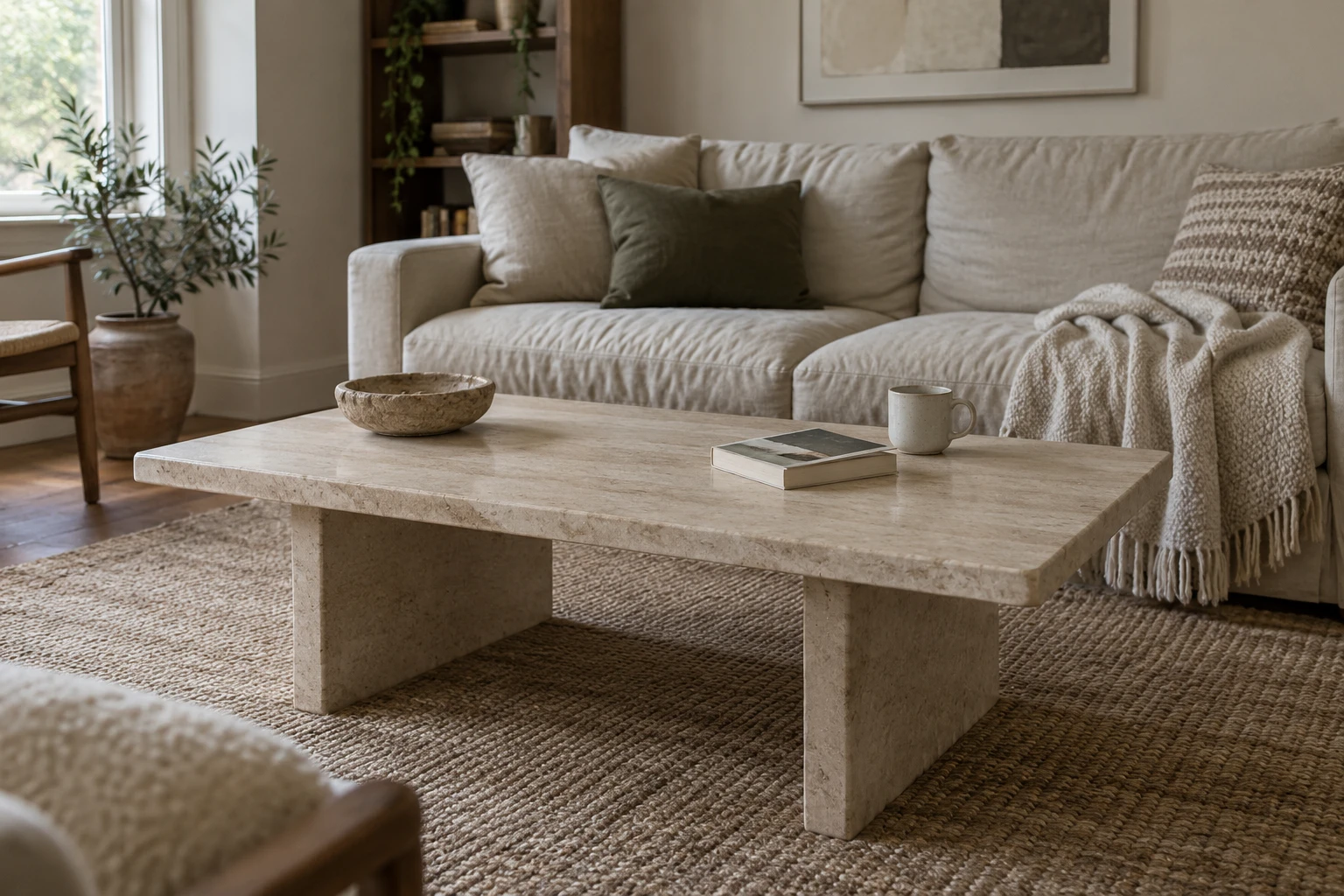
The tray can be the first small expression of a wider interest in the material. You do not need the same stone on every piece of furniture. In a living room, a simple coffee table can sit comfortably with linen and timber. At the bedside, a stone top and a wooden base offer a different balance. A related colour temperature or a shared sense of proportion can connect the spaces without turning them into a matching set. Give each room its own scale.
Care that fits the routine
Follow the instructions for the particular piece and finish. The Natural Stone Institute recommends appropriate cleaners, prompt attention to spills and avoiding acidic cleaners on acid-sensitive stones such as marble. A sealer does not make a surface stain-proof. [1] Keep cosmetics and perfume closed, and separate where you apply them from where you store jewellery. Do not choose a cleaner simply because it worked on another surface. Keep the seller’s care information with the purchase details so that future questions start with the right material.
A composition with room to breathe
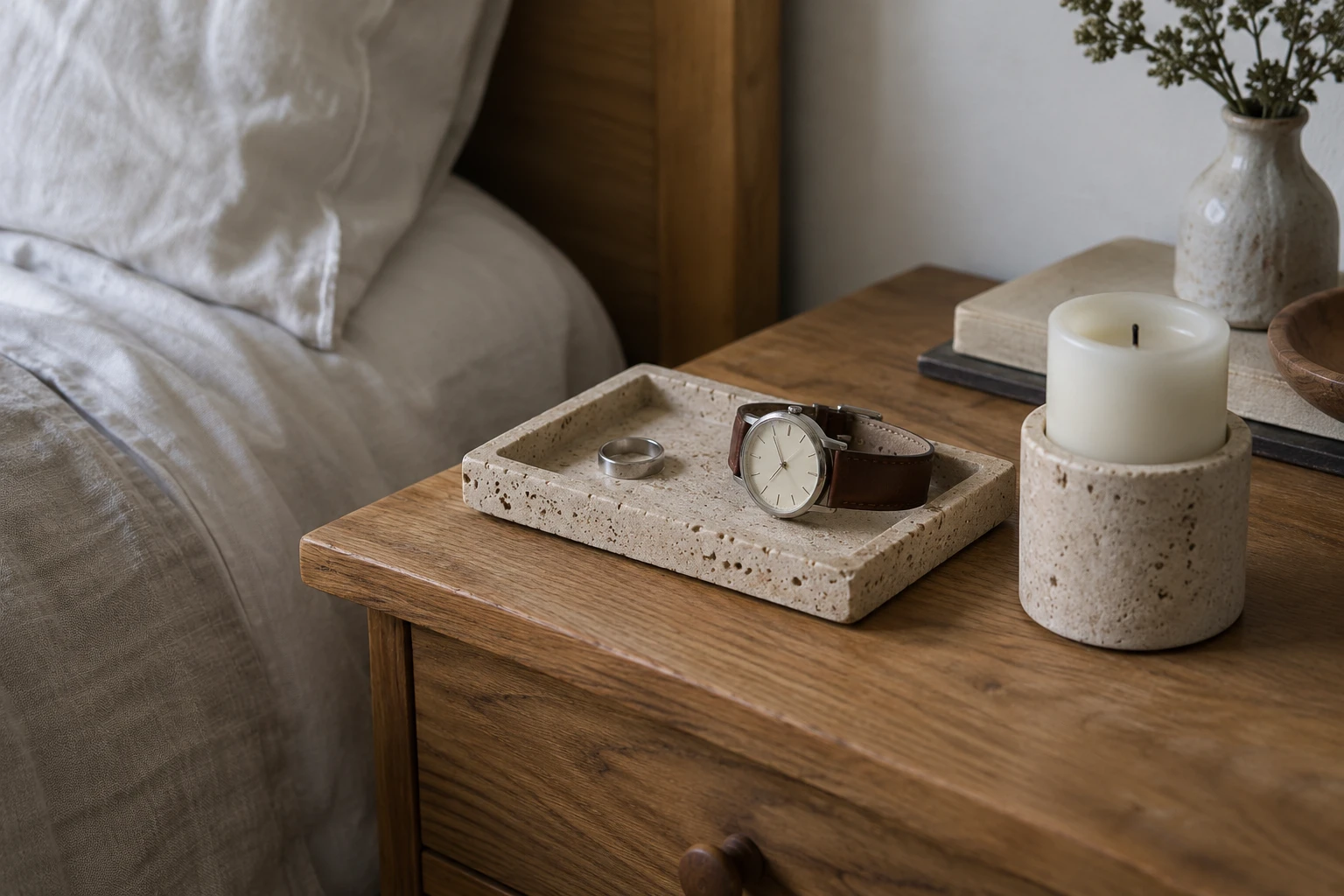
Our conceptual image places a tray, a watch and a ring beside an unlit candleholder. It suggests texture and scale, not a brand or a construction specification. To use real candles, select a holder intended for that purpose and follow its instructions and those supplied with the candle; a stone appearance alone does not establish suitability. The strongest result is a table that remains comfortable to use every night: one expressive piece, a few familiar objects and enough room for daily life.
CONTINUE THE CONVERSATION
What are you imagining?
Tell us which object or material interests you. The collection is in development; we are not accepting orders or payments.
Contact The Haus ↗