Start with the actual slab
Some natural stones transmit light. Antolini presents Cristallo BluLumix among its natural-quartz materials with backlit applications. That does not mean every product called Cristallo, or every region of a slab, transmits light equally.
Make a physical mock-up
Ask to test a sample with the intended finish, thickness and lighting arrangement. Review brightness, colour, diffusion, shadows from supports and the appearance of joints. A screen photograph cannot establish the result in your room.
Design the whole assembly
Plan the lighting, accessible power supply, supporting system and future maintenance with the relevant professionals. The stone is one part of an assembly, so its cost alone does not describe the complete project.
About the images
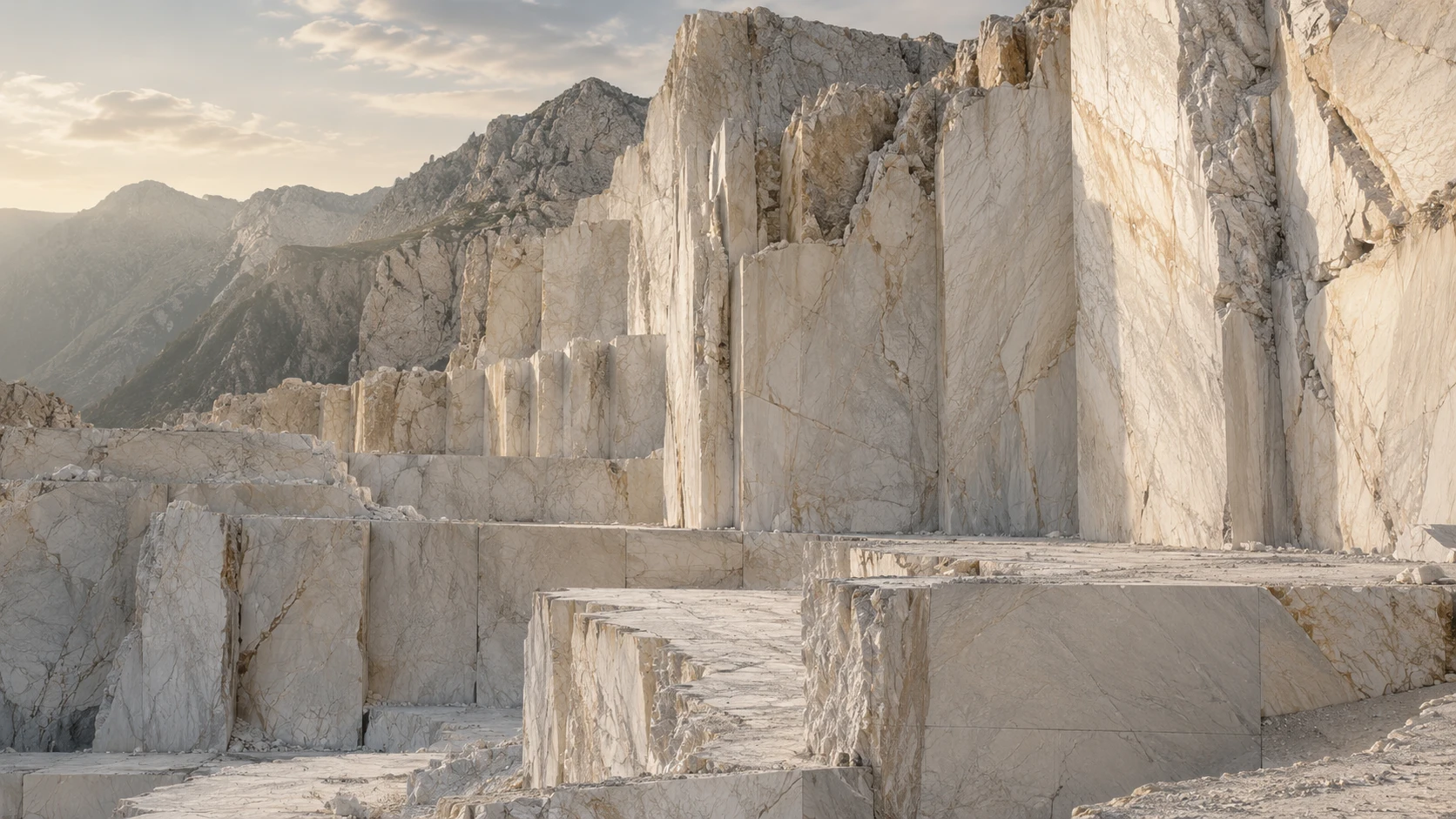
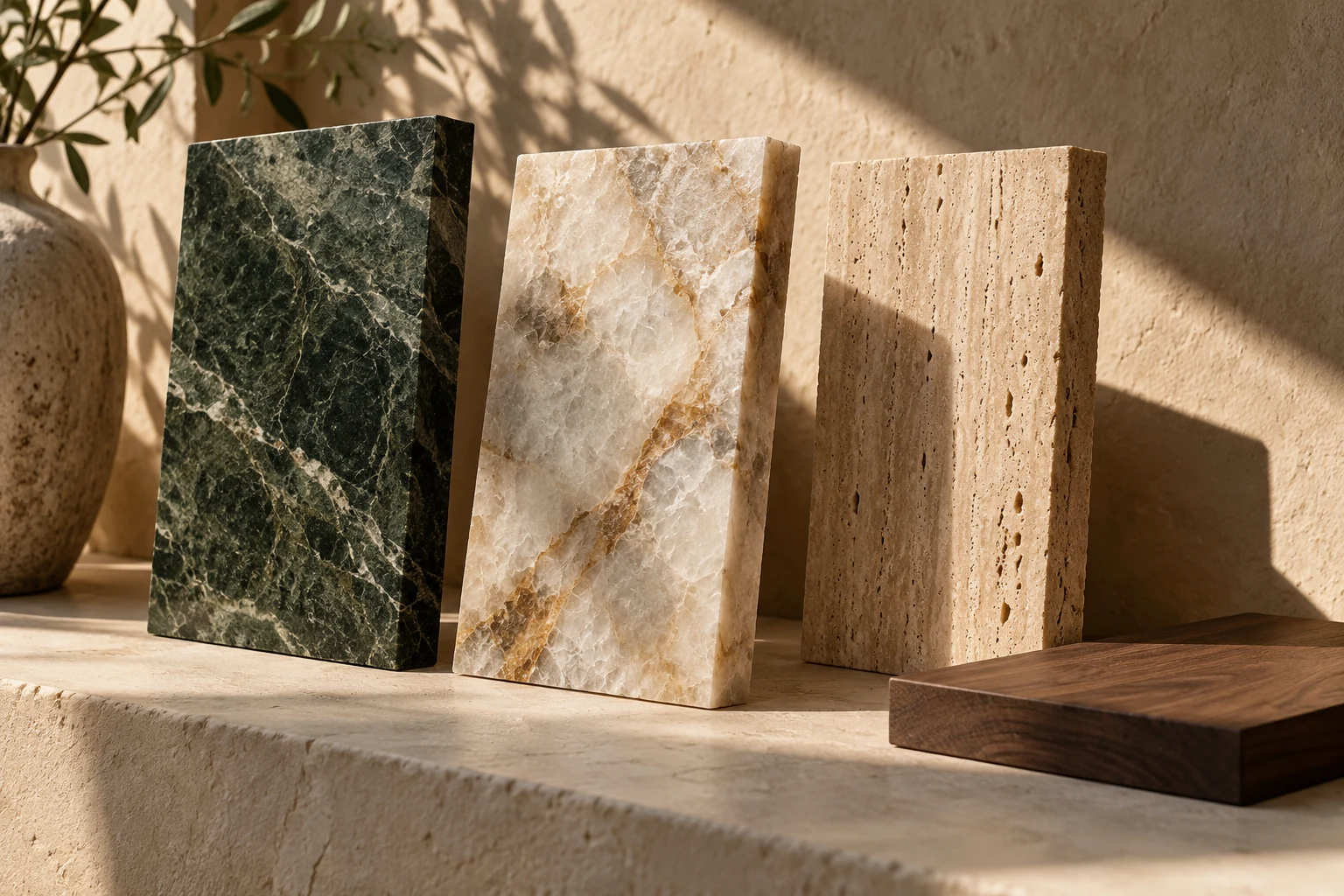
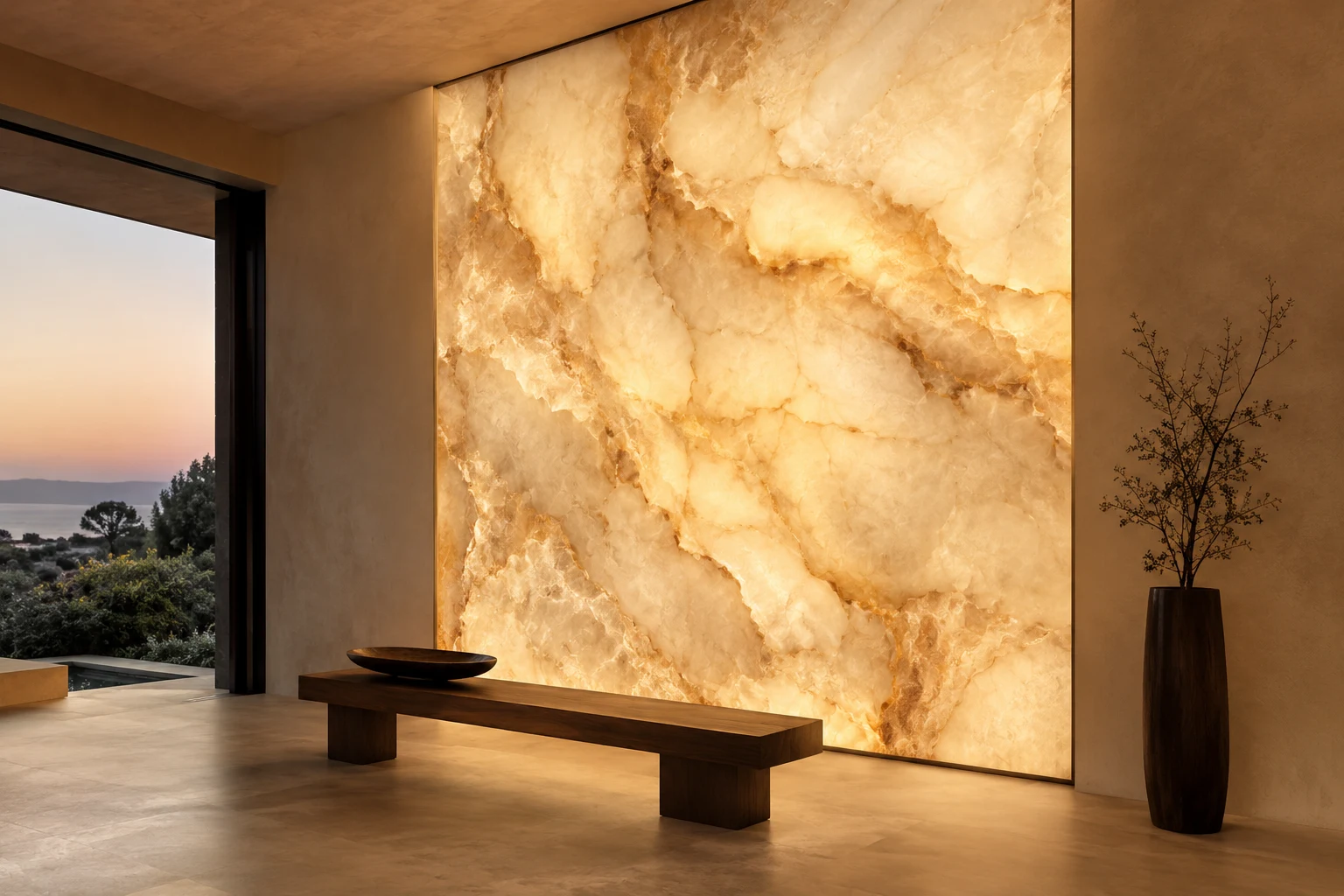
These AI-created design studies illustrate mood and composition. They do not show an identified commercial stone, establish translucency for a particular slab or document a completed installation.
Consider the unlit hours
Review the panel with its light switched off as well as on. It should belong to the room during the day, when its colour and surface do more of the work. At night, compare its brightness with the rest of the lighting rather than judging the glowing stone in isolation.
Where the idea belongs
A restrained illuminated wall can become the room’s focal point. Keep nearby finishes calm and consider where the eye should rest. Treat the image here as a mood study; its effect needs a physical mock-up before it becomes a specification.
CONTINUE THE CONVERSATION
What are you imagining?
Tell us which object or material interests you. The collection is in development; we are not accepting orders or payments.
Contact The Haus ↗