Begin with the operation
The question is not which tool looks most impressive in the workshop. It is which part of the job needs to become more controlled. Recording a room, positioning a slab, bringing a seam into alignment and finishing an edge are different operations. A useful selection begins by naming the task, the material and the conditions. This article is a framework for comparing categories, not a tested ranking of products or a guide to operating industrial equipment.
Measurement: capture the decisions as well as the dimensions
A digital template can record geometry, but a project also contains choices: which face is finished, where an appliance belongs, how much overhang is intended and which joints are acceptable. A clear specification makes the measurements useful to the next person. When comparing templating systems, ask what the package includes: hardware, tablet, software features, exports, training and support. A lower entry price may describe a different bundle rather than an equivalent workflow. Ask for a demonstration using a representative project and check how the information reaches the fabrication team.
Handling: compare the rated use, not the largest number
Vacuum equipment is not interchangeable simply because two devices have similar handles. The applicable capacity depends on the model, surface, orientation and conditions described by its manufacturer. A maximum test figure is not permission to move any slab of that weight. Before considering a purchase, identify the intended task, read the correct manual and confirm the complete handling plan with the responsible professionals. Ask about inspections, service and replacement parts as well as the initial kit. An attractive product image cannot answer those questions.
Seams: alignment is one part of the result
A seam setter is intended to assist positioning and alignment. It does not make a layout decision, correct every cut or guarantee an invisible joint. Compare the actual surface compatibility, adjustment mechanism, available working space and manufacturer guidance. Keep it separate from lifting equipment unless the manufacturer explicitly rates the particular device for that operation. The finished joint also belongs to a wider conversation about material, fabrication, adhesive system and installation conditions. The best purchasing question is specific: what repeatable problem should this tool help the team solve?
Finishing: match the machine and the accessory
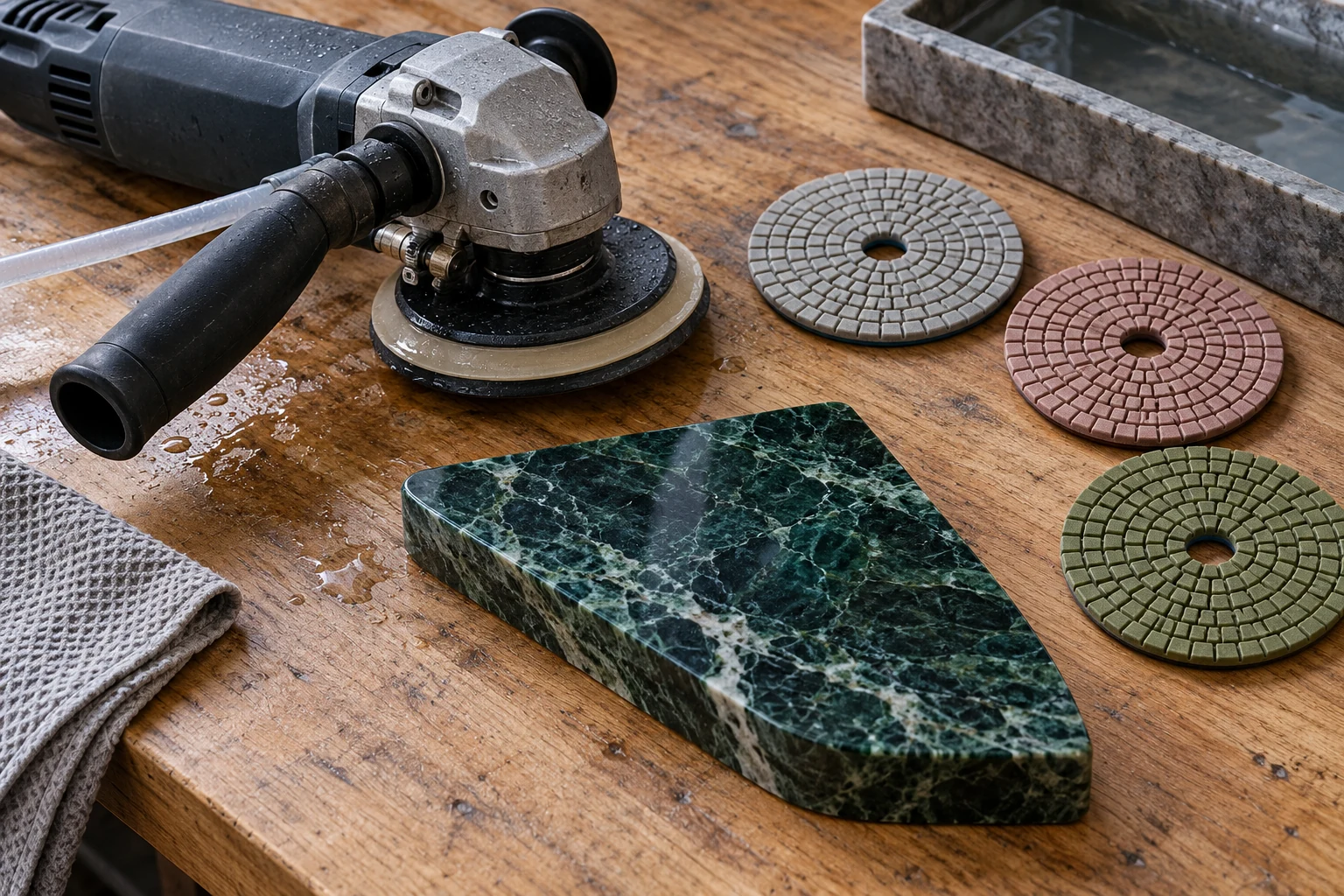
Cutting and polishing are different jobs. A wet stone polisher should be compared as a finishing tool, using its manufacturer’s permitted accessories and operating limits. The presence of a spindle does not establish that another accessory is suitable. Check the exact model, regional electrical requirements, accessory specification, water arrangement and maintenance instructions before selecting a system. Include consumables in the comparison, along with service availability and the time needed to learn a controlled process. Avoid choosing from a single speed or power number without understanding the complete application.
A workshop system, not an isolated purchase
A CNC machine brings software, tooling, workholding, utilities, commissioning and training into the same decision. Its headline specification does not describe the full installed system or guarantee a return on investment. Ask for a configuration and a demonstration that reflect the work the shop actually does. Keep quote assumptions visible: which options, support, installation services and ongoing costs are included? A machine chosen for one production mix may not be the right answer for another. This is where an informed conversation with the manufacturer matters more than a generic best-tools list.
Control the exposure, not just the finish
Stone cutting, grinding and finishing can create respirable crystalline silica. OSHA and NIOSH identify risks in natural and engineered stone work. Water on a tool alone does not establish that exposure is controlled; the process needs appropriate engineering controls, exposure assessment and training. Use the applicable manufacturer instructions and the workplace safety program rather than treating an editorial article as an operating procedure. A considered installation starts with planning how the work will be done, not only how its final edge will look.
What The Haus will compare
Our future tool stories will identify the exact model, intended use, documentation, maintenance and limitations. When we have not physically tested a product, we will say so. Commercial terms will be considered separately from technical suitability: a commission is not evidence of performance. For now, begin with one operation that needs improvement, gather the relevant specification and ask for a demonstration. A better tool decision is one the team can explain before the purchase and evaluate afterward against the job it was meant to do.
CONTINUE THE CONVERSATION
What are you imagining?
Tell us which object or material interests you. The collection is in development; we are not accepting orders or payments.
Contact The Haus ↗