Start with the view that matters
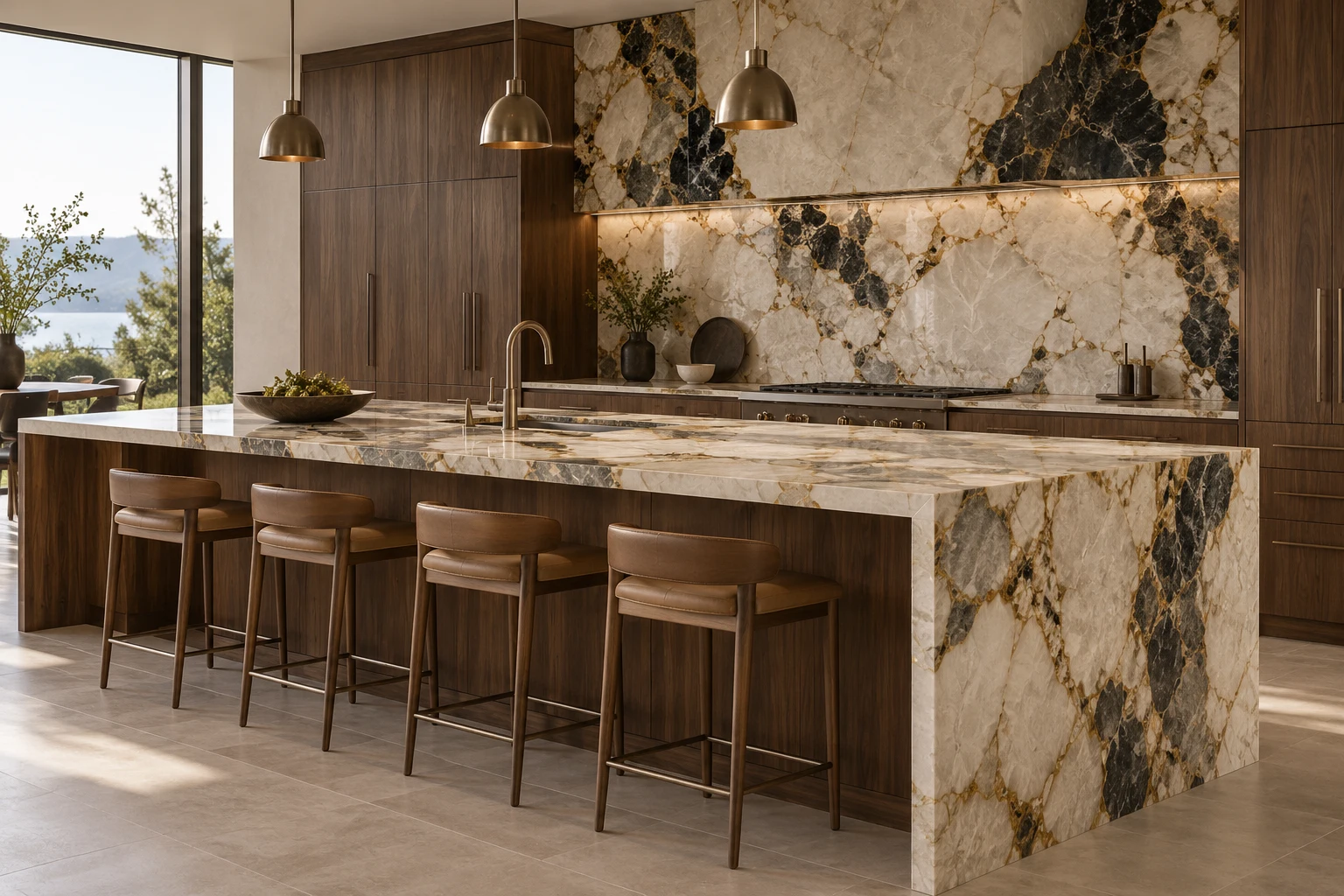
Imagine walking into your kitchen. Your first view might be the end of the island, or it might be the backsplash behind the range. Our editorial approach is to choose a focal point before distributing the stone. An expressive mineral pattern might benefit from quiet surroundings, while a more restrained composition can leave room for cabinetry or a pendant light to become the stronger visual element.
Bring a photograph of the room and mark that first viewpoint. You do not need to settle every detail immediately. Begin with a clear statement: “I want this area to be what you notice first.” That gives a design conversation more direction than requesting a luxurious kitchen without explaining what luxury means to you. It also separates a central preference from something you could comfortably compromise on.
Review a composition, not just a color
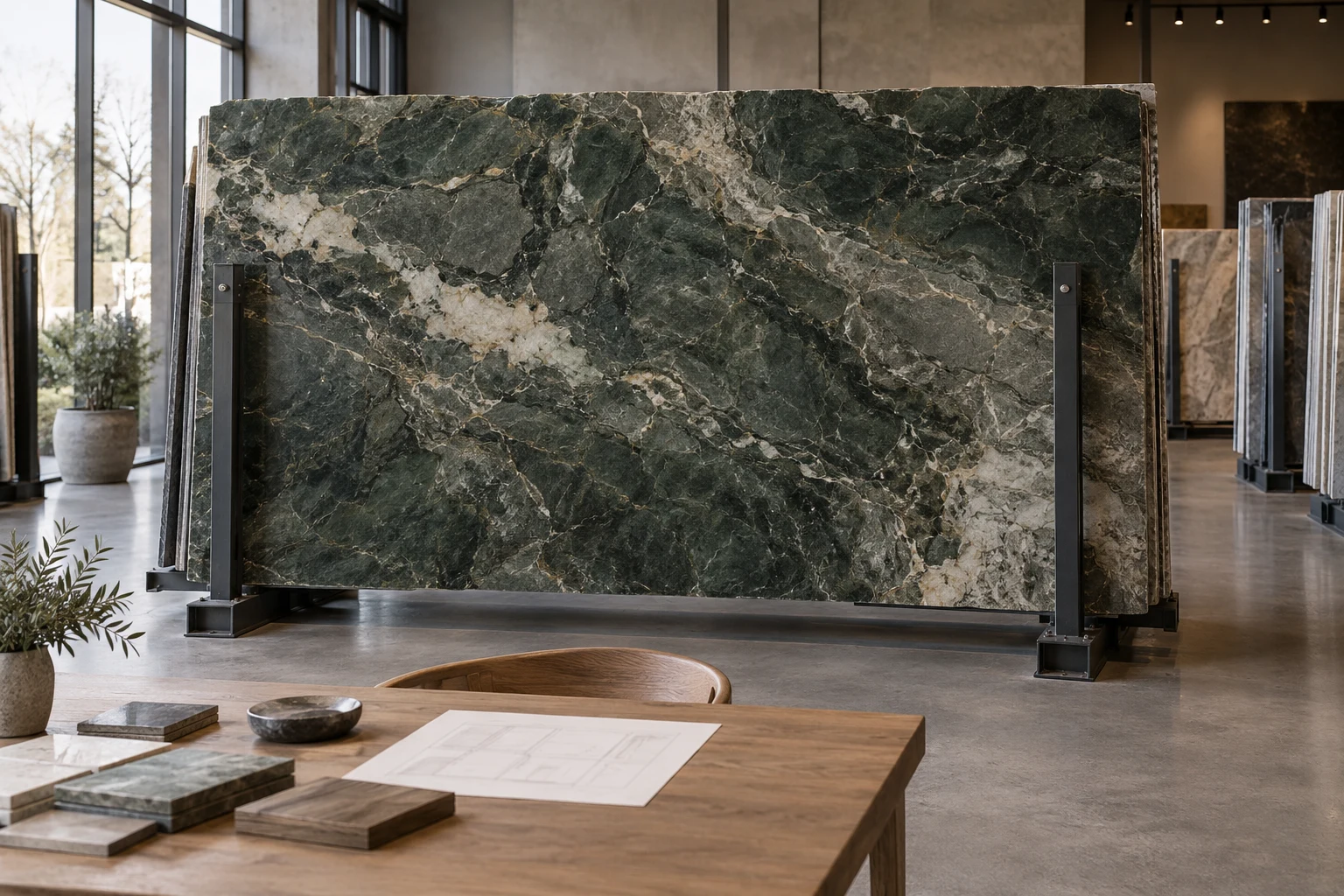
A small sample can begin a discussion about finishes, but your approval should identify the pieces intended for the project. Ask for overall photographs, slab references, and a proposed layout. As a review method, we suggest comparing two arrangements using the same photographs and dimensions, rather than changing the lighting or scale between versions.
One arrangement might place the most expressive area on the island. Another might reserve it for the wall. Explain which you prefer and why. Mark a mineral feature you particularly like, and flag a contrast you would rather not place beside a joint. These notes communicate your taste; they are not a technical diagnosis of the stone or an instruction to ignore fabrication constraints.
Name the continuity you want
Bookmatching arranges related slab faces into an approximately mirrored composition. Vein matching seeks visual flow between pieces. They are different goals: a symmetrical wall and a flowing waterfall may need different arrangements. Neighboring slabs can still vary, so duplicating and reversing a photograph cannot prove that the actual material will deliver an identical result. [1]
Ask to see the real faces and their proposed orientation. Then describe the effect in everyday language: a balanced center, a continuous diagonal, or a quiet transition. A technical term should help clarify your intention. It should not replace looking at the specific arrangement and deciding whether you like what it does to the room.
Look at what will be removed
Request a layout showing the sink, cooktop, seams, and vertical pieces. Read the image as though the cutouts were already empty. Our suggested sequence is to review the large surfaces first, then the transitions: island to waterfall, countertop to backsplash, and any change of direction.
Collect questions on one version of the drawing. Will a favorite feature disappear into a cutout? Does the most visible meeting point look as you expected? Does the composition still work from the entrance? The fabricator must establish what is feasible and explain technical constraints that require an adjustment. A visual preference should not become a cutting instruction without that review.
Ask the estimate to explain the design
Bookmatching can involve additional material and exacting planning; damage to a related piece can compromise the arrangement. [1] Rather than assuming a universal premium, request a written comparison of the alternatives under consideration. Ask what changes in material, fabrication, transportation, and installation, and which costs are excluded from each estimate.
Discuss what would happen if a reserved slab became unavailable. Our recommendation is to require renewed approval for a substitution that changes the chosen appearance. This is not about predicting every setback. It is about making sure an important design decision does not become an unspoken assumption when somebody needs to solve a problem quickly.
Picture the first Monday, not only the first photograph
Before committing, ask about care for the exact material and finish. The Natural Stone Institute distinguishes siliceous and calcareous stones and recommends suitable stone cleaners; acids can particularly affect calcareous materials. Sealing can improve stain resistance without making a surface stain-proof. [2]
Bring those considerations into the design conversation: where drinks will sit, how the island will be used, and how much surface change you are comfortable seeing over time. Finally, keep a folder containing slab identification, the approved layout, the estimate, and the specified care instructions. A considered kitchen begins when everyone can recognize the same idea before the first cut.
CONTINUE THE CONVERSATION
What are you imagining?
Tell us which object or material interests you. The collection is in development; we are not accepting orders or payments.
Contact The Haus ↗